


July 2024
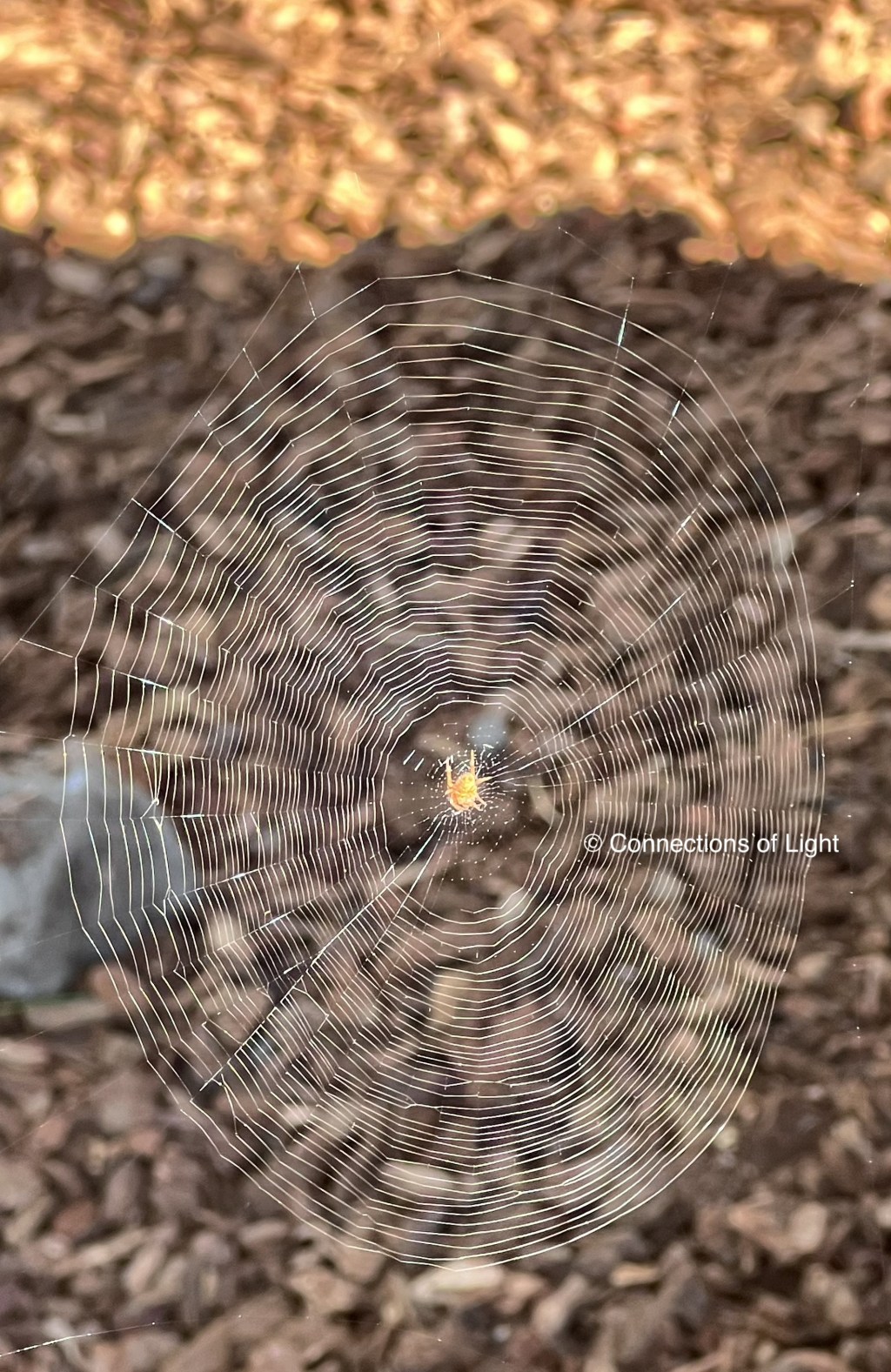
Last week, I had some bark chip mulch delivered to spread around a beautiful sixty-foot Deodar Cedar that is near my house. A few hours after the bark chips had been delivered, something caught my attention between the mulch pile and the cedar’s trunk.
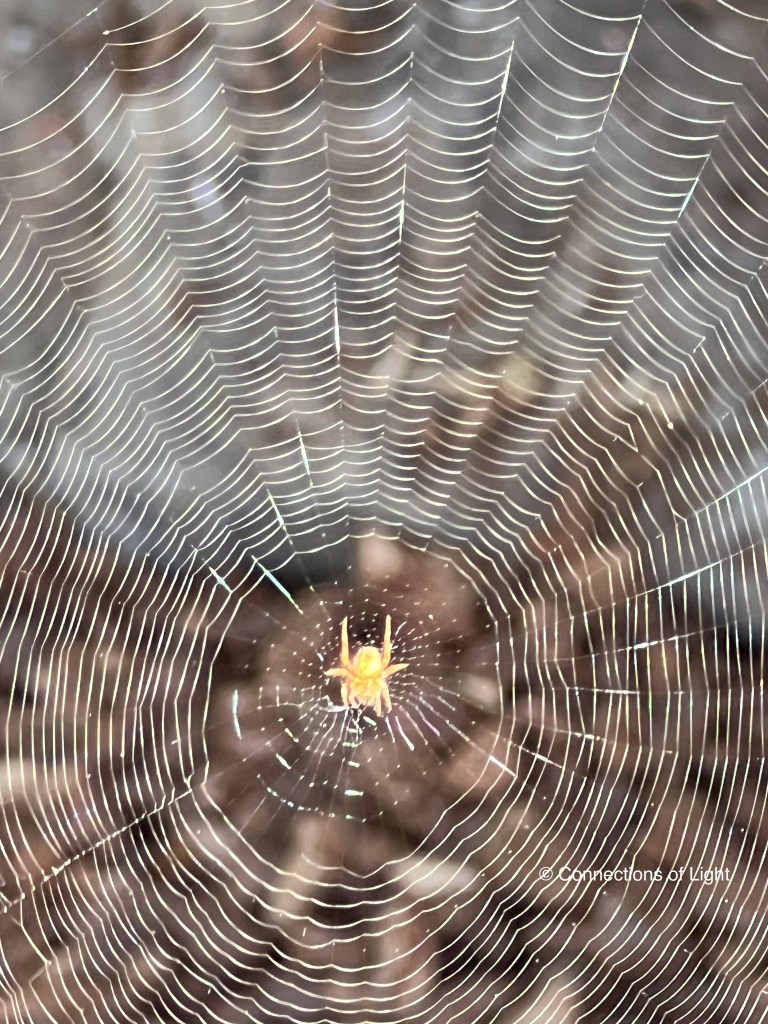
I moved closer, not sure if I actually saw something or not. It was a spider web: delicate, precise and beautiful. I was all the more impressed because it had only been a few hours since the bark chips arrived. Only after I stared at the web for a bit did I notice the creator of this masterpiece. Sitting still in the web’s center was a tiny, gorgeous yellow spider.
My first impression upon looking at the web was how perfect and symmetrical it was. Perfect.
Perfectionism. I have done a lot of work with it over the years. When I was much younger, I viewed perfection as a positive. At the time, my thought was “Who does not want to be perfect?”
During my youth and young adulthood, people in my life sometimes called me a “perfectionist.” Each time, I took it as a compliment. I viewed perfection as something towards which to strive. And with every “compliment,” I tried harder to be “perfect.”
But what does that even mean, being “perfect?” I do not think that I could have given anyone a great definition of what “perfect” meant at that time. Did it mean perfect in thought? Perfect in thoughts of what? Perfect in action? Perfect in what actions, exactly? Perfect in my relationships with those in my life (friends, family, work colleagues, boss, significant other)? Having a perfect relationship? (What does this even mean, honestly? Being the person another thinks or wants you to be? Filling a role that is delineated by another, by society, or by cultural pressures? Being your true, authentic self in relation to another?) Turning out perfect work, whether it be at school or in a job?
I now notice that in all of this, I considered me in relation to that which was outside of myself. Me and my work. Me and my bosses. Me and my family/extended family. Me and my friends. Me and my significant other. I remember clearly the pressure I put upon myself to be “perfect.”
What did my efforts to be “perfect” get me? I felt burned out, both emotionally and physically. My physical health suffered. Any feelings of satisfaction that I got in meeting the demands and expectations of others were fleeting. I pushed myself to exhaustion, both with my work and being there for others, and it still did not feel like it was enough. If I ever did put myself out there trying new things, I internalized the lowest opinion of my hardest critic, feeling badly if I “failed” or did not live up to expectations. And if all of this wasn’t enough, I also lost touch with my inner self, my core essence — because I was so busy focusing on the external and on others to be “perfect” in their eyes.
Somewhere between my younger adult self and my current self, I changed. I realized there had to be more to life than what I was experiencing. I realized that I wanted to be in touch with my authenticity and who I really am. I realized that life holds so much joy, bliss, and light, if I only take the time to look for it and recognize it when I see it. This is what I wanted to experience in my life. My revelation led to my reversal of seeing “perfectionism” as something that I wanted for myself.
I now see being a “perfectionist” as something that is confining and restrictive. Being “perfect” and doing things “perfectly” means never making a mistake, which means never welcoming the space that I need to learn and remember. It means restricting my wishes and hopes.
“Perfectionism” also felt defensive to me. It encouraged me to be guarded. It disapproved of me living in my human body and living in the moment; it pushed hard for me to live within the strict confines of my mind. Rather than being “perfect,” I choose to live my life experiencing the full range of human emotions, including those that bring discomfort. So many times, the discomfort I have experienced has led me to positive change, needed growth, and beautiful remembrance.
From where I am now in my life, I see “perfectionism” as often being wrapped up with fear. There is the fear of not doing something exactly “right.” The fear of someone feeling the need to “correct” that which is deemed “imperfect.” There is the fear of being judged and being deemed somehow inferior or not worthy, either in skill, as a person, or both. At its very core, living in a state of being fearful of someone else’s judgment involves the often unconscious action of giving up one’s own power and free will to another.
I choose not to give up my freedom and my power. I choose to move affirmatively toward the things that I want in my life. I choose not to make decisions based upon fear — the fear of what might happen, the fear of what could happen, the fear of what may never happen. To me, making decisions based upon the fear of “what if” is not moving toward the affirmative; instead, it is like moving backwards, without being able to see clearly where I am going. I choose to move toward new experiences and meeting new people. I choose to take chances, many small and some bigger, in doing things and activities that might fall at the edge of my comfort zone instead of being firmly within it.
When I looked closely and stared at the incredible web that little yellow spider wove, I saw sections of the web that were a little asymmetrical and not strictly in line with other threads. I noticed a few spots where two threads that were separate in other sections of the web seemed to come together in another. What really stuck me, though, was the beauty and interconnectedness of the web as a whole. It was incredibly beautiful, fully functional, and perfectly imperfect. I am grateful for the little yellow spider reminding me about what is so much more valuable than perfection.

 Connections of Light
Leave a comment